How Do You Know if You Have an Ulcer in Stomach
Stomach Ulcers: Causes, Symptoms & Treatments
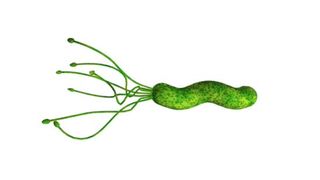
Peptic ulcers, likewise known as tum ulcers, are open sores that develop in the lining of the esophagus, stomach or the offset part of the small-scale intestine, known as the duodenum. Over 25 million Americans will endure from an ulcer at some point during their lifetime, co-ordinate to the Centers for Disease Control and Prevention (CDC), and there are approximately 500,000 to 850,000 new cases of ulcer disease each year.
Well-nigh ulcers are caused past an infection by Helicobacter pylori bacteria (H. pylori), and can be treated in about two weeks with antibiotics, according to the CDC.
"The two well-nigh common causes of ulcers are H. pylori, a bacterial infection, and medications, most ordinarily aspirin and other non-steroidal anti-inflammatory medicines (NSAIDs), and atomic number 26 tablets," said Dr. Arun Swaminath, manager of the Inflammatory Bowel Disease Program at Lenox Colina Infirmary in New York City.
The discovery of H. pylori'southward function in ulcers led to the Nobel Prize in 2005 for Barry Marshall and Robin Warren, who were ridiculed when they suggested the idea, Swaminath said. It is a myth that peptic ulcers are caused past stress and spicy food. But these factors brand someone who already has ulcers feel even worse.
"Psychological stress probably has no office in the development of ulcers, though biological stress like existence a very ill patient in the intensive care unit of measurement can definitely contribute to ulcers," Swaminath said. "Foods aren't really idea to contribute to ulcers, just they may brand patients with already present inflammation or ulcers feel worse depending on what's eaten," he said.
Symptoms
The most common symptom of peptic ulcers is a burning hurting in the stomach, according to the National Institutes of Health (NIH). Typically, the pain starts between meals or during the night, and may cease if you swallow or take antacid medications. The pain comes and goes for several days or weeks, and tin be felt anywhere from your navel up to your breastbone, according to Mayo Clinic.
Although the most common symptom of ulcers is pain, the status can also present as bleeding or anemia, Swaminath said. "There are a lot of other organs around the surface area of the breadbasket. Part of the claiming of figuring out what is causing the 'abdominal hurting' is to rule in or out things like: pancreatitis, gallstones, Crohn's illness, or stomach cancer."
Psychological stress tin can cause symptoms that mimic the symptoms of ulcers, Swaminath said. Only because stressed-out people are at the same take chances for factors that actually can result in ulcers, they should consult their doc if they have persistent symptoms, he said.
Causes
Peptic ulcers happen when the acids that help digest food damage the walls of the stomach or duodenum. The insides of the digestive tract are coated with a mucus layer that protects against tummy acid, simply in some people who are infected with H. pylori, the bacteria get into the mucosal lining in the stomach, creating holes and exposing more sensitive tissue to stomach acid.
H. pylori is a common infection, and information technology is possible that the bacteria is spread between people through contact with infected stool, vomit or saliva. It besides may be contracted from contaminated h2o or food. According to the Mayo Clinic, one in five young adults is actually infected with the leaner. Still, for unknown reasons it does not result in ulcers in anybody.
Another crusade is the regular apply of certain hurting relievers, specifically, non-steroidal anti-inflammatory drugs (NSAIDS) such every bit aspirin and ibuprofen (Advil). The CDC states that ten percent of ulcers are caused by NSAIDs. These medications, every bit well as naproxen (Aleve) and ketoprofen, can irritate or inflame the lining of the stomach and small intestine. Peptic ulcers are more than common in older adults who take these pain medications frequently or in people who take these medications for osteoarthritis.
Cigarettes, alcohol, and stress can exacerbate symptoms by further irritating the stomach lining.
If left untreated, stomach ulcers tin cause bleeding from the ulcer that tin can lead to anemia. The bleeding tin can show upward every bit black colored stool, Swaminath said.
Diagnosis & tests
Doctors well-nigh commonly diagnose ulcers using endoscopy, Swaminath said. This involves "taking a camera directly into the stomach to look for ulcers and taking biopsies to make sure the 'ulcers' aren't actually cancer or something else," he said.
In that location are several other tests for the diagnosis of breadbasket ulcers. A medico may use a blood, stool, or breath test to detect the presence of H. pylori or antibodies to H. pylori, according to the Mayo Dispensary.
A breath test consists of drinking a glass of liquid that contains a radioactive substance. This substance reacts with H. pylori so that when an individual with breadbasket ulcers blows into a bag, the breath will contain the radioactive carbon in the course of carbon dioxide.
Sometimes an X-ray examination may be performed to visualize the ulcer. A liquid containing a metal chemical element called barium is ingested for this process. If an ulcer is found, the doc may look inside the digestive tract with endoscope, a flexible tube with a camera and light attached.
Treatment & Medication
Treatment of breadbasket ulcers consists of killing H. pylori and decreasing the corporeality of acid in the tum. This requires several types of medications.
Physicians may prescribe several antibiotics at once, or utilize a combination drug such equally Helidac to kill H. pylori. Helidac contains 2 antibiotics along with an acid-reducing drug and a medication that protects stomach tissue.
The doctors volition as well try to stop other medications the patient is taking and might take a function in worsening the ulcers.
"Most of the fourth dimension, we try to withdraw the offending medication, but that is non always possible, for example patients on aspirin who have eye arrhythmias, or recent heart stents," Swaminath said.
"Nosotros put patients on high doses of the drug for eight weeks by which time the area will typically heal," Swaminath said. "A low dose is continued indefinitely if the offending medication can't be discontinued."
Drugs called acrid blockers (for example, Pepcid) and antacids may be recommended to subtract the levels of tum acid. Other medicines, called proton pump inhibitors, such as Prilosec and Prevacid, are another selection. They work by blocking cellular pumps that release acid into the tummy.
Additional reporting by Alina Bradford, Live Science contributor.
Boosted resource
- Helicobacter pylori: A Nobel pursuit?
- U.S. Department of Health and Human Services: Symptoms & Causes of Peptic Ulcers (Stomach Ulcers)
- National Health Services: Stomach Ulcer
- Women's Health: Practise I Accept an Ulcer?

Bahar Gholipour is a staff reporter for Live Scientific discipline covering neuroscience, odd medical cases and all things health. She holds a Chief of Science caste in neuroscience from the École Normale Supérieure (ENS) in Paris, and has done graduate-level work in science journalism at the State University of New York at Stony Brook. She has worked as a research banana at the Laboratoire de Neurosciences Cognitives at ENS.
deshieldsstion1943.blogspot.com
Source: https://www.livescience.com/34799-stomach-peptic-gastric-ulcers.html

Post a Comment for "How Do You Know if You Have an Ulcer in Stomach"