What Happens if a Person With Down Syndrome Has a Baby
Down's syndrome is a condition in which a person has an actress chromosome.
What is Down syndrome?
Down's syndrome is a condition in which a person has an extra chromosome. Chromosomes are small "packages" of genes in the body. They determine how a baby's torso forms and functions as it grows during pregnancy and subsequently nativity. Typically, a baby is born with 46 chromosomes. Babies with Down syndrome have an actress re-create of one of these chromosomes, chromosome 21. A medical term for having an extra copy of a chromosome is 'trisomy.' Down's syndrome is also referred to as Trisomy 21. This extra copy changes how the infant's body and brain develop, which tin crusade both mental and physical challenges for the baby.
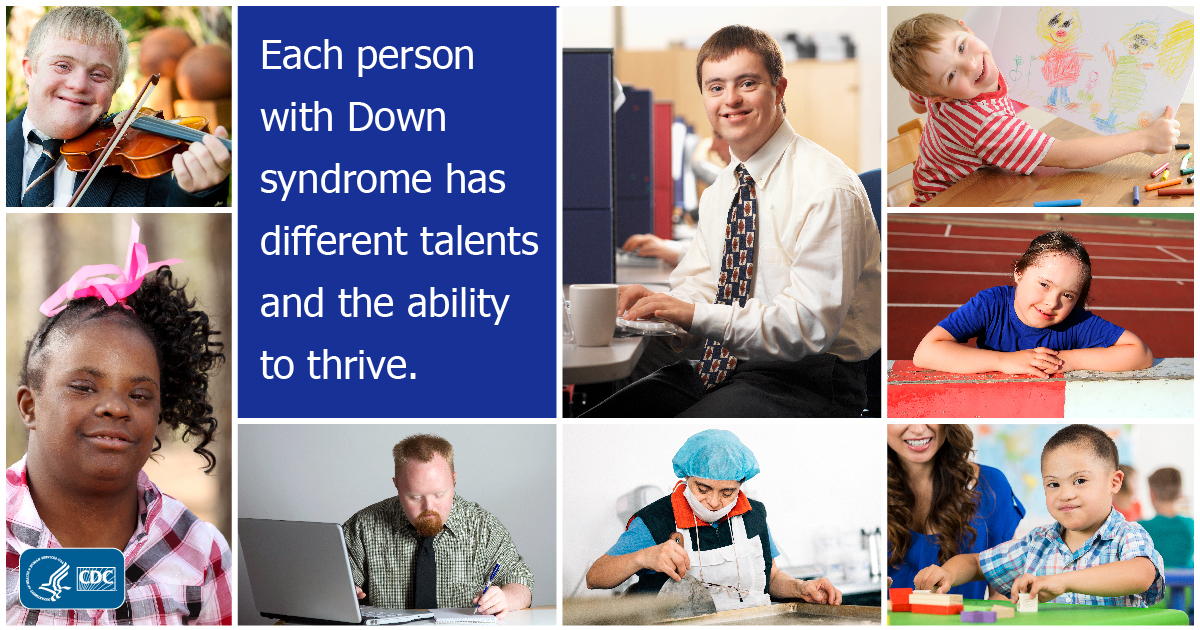
Even though people with Down syndrome might act and look like, each person has different abilities. People with Down syndrome usually have an IQ (a measure of intelligence) in the mildly-to-moderately low range and are slower to speak than other children.
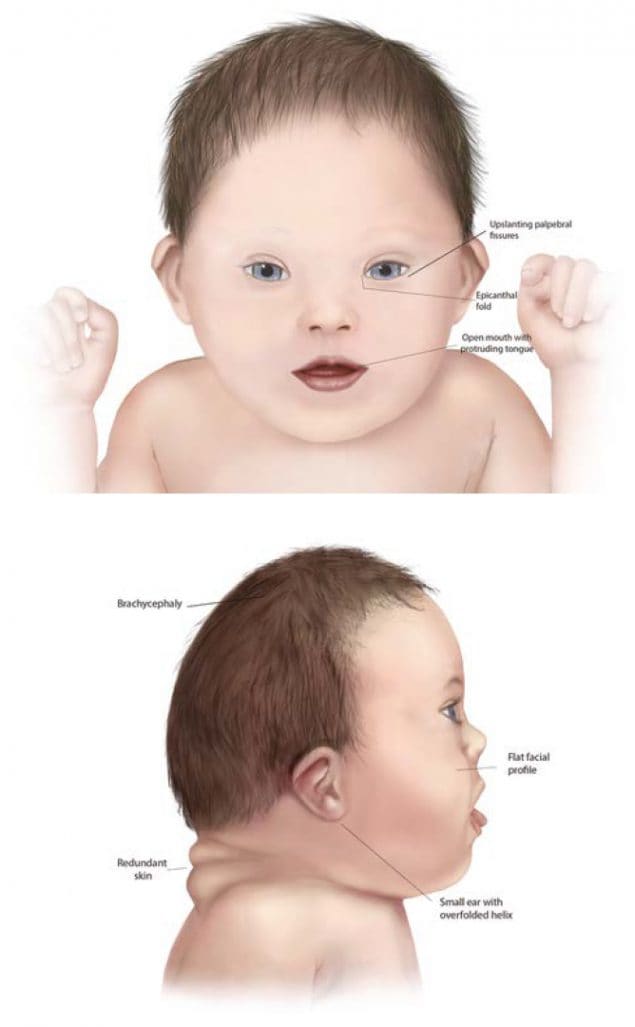
Some common physical features of Downwardly syndrome include:
- A flattened confront, particularly the bridge of the nose
- Almond-shaped eyes that slant up
- A brusk neck
- Small ears
- A natural language that tends to stick out of the oral cavity
- Tiny white spots on the iris (colored part) of the eye
- Small hands and feet
- A single line across the palm of the hand (palmar crease)
- Pocket-size pinky fingers that sometimes curve toward the thumb
- Poor musculus tone or loose joints
- Shorter in pinnacle as children and adults
How Many Babies are Built-in with Down's syndrome?
Down syndrome remains the nigh common chromosomal condition diagnosed in the United States. Each year, about vi,000 babies born in the Us have Down syndrome. This means that Down syndrome occurs in virtually 1 in every 700 babies.1
Types of Down syndrome
At that place are 3 types of Down syndrome. People oftentimes can't tell the difference between each type without looking at the chromosomes because the physical features and behaviors are similar.
- Trisomy 21: About 95% of people with Down syndrome have Trisomy 21.2 With this type of Down syndrome, each jail cell in the body has 3 separate copies of chromosome 21 instead of the usual ii copies.
- Translocation Down's syndrome: This blazon accounts for a small percent of people with Down syndrome (about 3%).2 This occurs when an extra function or a whole extra chromosome 21 is present, but it is attached or "trans-located" to a unlike chromosome rather than being a dissever chromosome 21.
- Mosaic Down's syndrome: This type affects almost 2% of the people with Down syndrome.2 Mosaic means mixture or combination. For children with mosaic Downwardly syndrome, some of their cells have three copies of chromosome 21, simply other cells have the typical two copies of chromosome 21. Children with mosaic Down syndrome may have the same features equally other children with Down syndrome. All the same, they may have fewer features of the condition due to the presence of some (or many) cells with a typical number of chromosomes.
Causes and Risk Factors
- The extra chromosome 21 leads to the physical features and developmental challenges that can occur among people with Downwards syndrome. Researchers know that Down's syndrome is acquired past an extra chromosome, only no one knows for sure why Down syndrome occurs or how many different factors play a role.
- One factor that increases the risk for having a baby with Down syndrome is the female parent's historic period. Women who are 35 years or older when they get meaning are more than probable to have a pregnancy affected past Down syndrome than women who go pregnant at a younger historic period.3-fiveNotwithstanding, the majority of babies with Down syndrome are born to mothers less than 35 years old, considering there are many more births among younger women.6,7
Diagnosis
There are two basic types of tests bachelor to find Down's syndrome during pregnancy: screening tests and diagnostic tests. A screening test can tell a woman and her healthcare provider whether her pregnancy has a lower or higher take a chance of having Down's syndrome. Screening tests exercise not provide an absolute diagnosis, merely they are safer for the mother and the developing baby. Diagnostic tests can typically detect whether or not a infant will have Down syndrome, but they can be more risky for the female parent and developing baby. Neither screening nor diagnostic tests can predict the full touch on of Down syndrome on a baby; no 1 tin predict this.
Screening Tests
Screening tests often include a combination of a claret exam, which measures the amount of diverse substances in the mother's claret (due east.g., MS-AFP, Triple Screen, Quad-screen), and an ultrasound, which creates a picture of the baby. During an ultrasound, ane of the things the technician looks at is the fluid behind the baby's neck. Extra fluid in this region could indicate a genetic problem. These screening tests tin can help make up one's mind the babe'south gamble of Down syndrome. Rarely, screening tests can requite an abnormal result fifty-fifty when there is nothing wrong with the babe. Sometimes, the examination results are normal and yet they miss a trouble that does exist.
Diagnostic Tests
Diagnostic tests are unremarkably performed subsequently a positive screening exam in club to ostend a Down's syndrome diagnosis. Types of diagnostic tests include:
- Chorionic villus sampling (CVS)—examines fabric from the placenta
- Amniocentesis—examines the amniotic fluid (the fluid from the sac surrounding the baby)
- Percutaneous umbilical claret sampling (PUBS)—examines claret from the umbilical cord
These tests look for changes in the chromosomes that would betoken a Down syndrome diagnosis.
Other Health Problems
Many people with Down's syndrome have the common facial features and no other major birth defects. However, some people with Down syndrome might have one or more major nascence defects or other medical issues. Some of the more common health issues amidst children with Down syndrome are listed beneath.8
- Hearing loss
- Obstructive sleep apnea, which is a condition where the person'southward breathing temporarily stops while asleep
- Ear infections
- Eye diseases
- Heart defects present at birth
Health intendance providers routinely monitor children with Down syndrome for these conditions.
Treatments
Down's syndrome is a lifelong status. Services early in life will frequently assist babies and children with Down syndrome to improve their concrete and intellectual abilities. Most of these services focus on helping children with Down's syndrome develop to their total potential. These services include speech, occupational, and physical therapy, and they are typically offered through early intervention programs in each state. Children with Down syndrome may besides need actress help or attention in schoolhouse, although many children are included in regular classes.
Other Resources
The views of these organizations are their own and do not reflect the official position of CDC.
- Down syndrome Research Foundation (DSRF)external icon
DSRF initiates enquiry studies to improve empathise the learning styles of those with Down syndrome. - Global Down syndrome Foundationexternal icon
This foundation is dedicated to significantly improving the lives of people with Down syndrome through research, medical care, pedagogy and advocacy. - National Association for Down syndromeexternal icon
The National Clan for Down Syndrome supports all persons with Downwards syndrome in achieving their full potential. They seek to help families, educate the public, address social issues and challenges, and facilitate agile participation. - National Downwardly Syndrome Society (NDSS)external icon
NDSS seeks to increase awareness and acceptance of those with Down syndrome.
References
- Mai CT, Isenburg JL, Canfield MA, Meyer RE, Correa A, Alverson CJ, Lupo PJ, Riehle‐Colarusso T, Cho SJ, Aggarwal D, Kirby RS. National population‐based estimates for major birth defects, 2010–2014. Birth Defects Enquiry. 2019; 111(18): 1420-1435.
- Shin M, Siffel C, Correa A. Survival of children with mosaic Down syndrome. Am J Med Genet A. 2010;152A:800-ane.
- Allen EG, Freeman SB, Druschel C, et al. Maternal historic period and risk for trisomy 21 assessed by the origin of chromosome nondisjunction: a report from the Atlanta and National Down Syndrome Projects. Hum Genet. 2009 February;125(1):41-52.
- Ghosh S, Feingold Eastward, Dey SK. Etiology of Down syndrome: Prove for consequent association among altered meiotic recombination, nondisjunction, and maternal age across populations. Am J Med Genet A. 2009 Jul;149A(seven):1415-20.
- Sherman SL, Allen EG, Bean LH, Freeman SB. Epidemiology of Down syndrome. Ment Retard Dev Disabil Res Rev. 2007;13(3):221-7.
- Adams MM, Erickson JD, Layde PM, Oakley GP. Down'south syndrome. Recent trends in the United States. JAMA. 1981 Aug 14;246(7):758-lx.
- Olsen CL, Cantankerous PK, Gensburg LJ, Hughes JP. The effects of prenatal diagnosis, population ageing, and changing fertility rates on the live nascence prevalence of Down syndrome in New York State, 1983-1992. Prenat Diagn. 1996 Nov;sixteen(11):991-1002.
- Bull MJ, the Committee on Genetics. Health supervision for children with Down syndrome. Pediatrics. 2011;128:393-406.
deshieldsstion1943.blogspot.com
Source: https://www.cdc.gov/ncbddd/birthdefects/downsyndrome.html

Post a Comment for "What Happens if a Person With Down Syndrome Has a Baby"